Android 15 on a board that shipped with Android 4.3
Back to the DragonBoard 8074 hub
Situation
November 2026. The DragonBoard ran its stock Android 4.3 on a 3.4 kernel. Mainline Linux still has a
device tree for it (qcom-apq8074-dragonboard.dts), and a community bootloader, lk2nd, still supports
MSM8974.
Task
Get Android 15 with kernel 6.6.162 LTS to a usable home screen, without ever writing the stock boot chain (sbl1, rpm, tz, aboot). If I lose aboot, I lose the board (and, as I found out later, it has no EDL mode to recover from).
Action
Build. android-15.0.0_r36 is the last Android 15 tag: 1030 projects, a 122 GB tree. I wrote a
32-bit armv7-a-neon device for it. First trap: the release config trunk_staging (what a lot of
boards use) builds “Baklava”, Android 16 flags, from this Android 15 tree. I switched to bp1a, the
release that matches the tag’s build ID. Output: boot.img 14 194 688 bytes (kernel + DTB + 200
modules) and a 1 GB sparse super.img.
Safety net. Before trying anything, I backed up all 16 small eMMC partitions with SHA-256 sums. That backup is still my way back to stock.
First boot, from RAM only. Stock aboot → fastboot boot lk2nd.img → fastboot boot my image.
Six tries, each fix found on the serial log: a lk2nd DTS for msm-id 184 / board-id 10, a v0 boot
image with the DTB appended, lk2nd’s ramdisk/DTB addresses moved up so they don’t overlap the kernel
(that one was a silent hang), and SELinux in the LSM list. Then Android’s first-stage init started at
4.57 s and stopped at 30.6 s: partition(s) not found after polling timeout: super.
Up to adb. Two causes, not one. The RPM never probed because in 6.6 mbox_request_channel()
returns -ENOENT and qcom_smd only falls back on -ENODEV. One patch, and suddenly eMMC, USB and
UART stop being deferred. And super had to live somewhere: I chose to overwrite the eMMC userdata
partition (12 GiB, the only one big enough). That needed two settings, not one,
androidboot.super_partition=userdata plus BOARD_SUPER_PARTITION_METADATA_DEVICE := userdata.
Then bpfloader exited 2 and init rebooted, because the arm32 BPF JIT doesn’t do atomics, so I patched it
to fall back to the interpreter. And g_ether.ko in the ramdisk grabbed the only USB device controller,
so adb never showed. Removed it.
$ adb shell getprop ro.build.version.release
15
Up to the screen. Five NoC bus clocks failed (6.6 moved them, the interconnect driver still asked
for the old names), another patch. The Adreno had no IOMMU, so I gave it a 128 MiB VRAM carveout and
cma=256M. system_server died on ashmem, which mainline doesn’t have: sys.use_memfd=true.
That got me the boot animation.
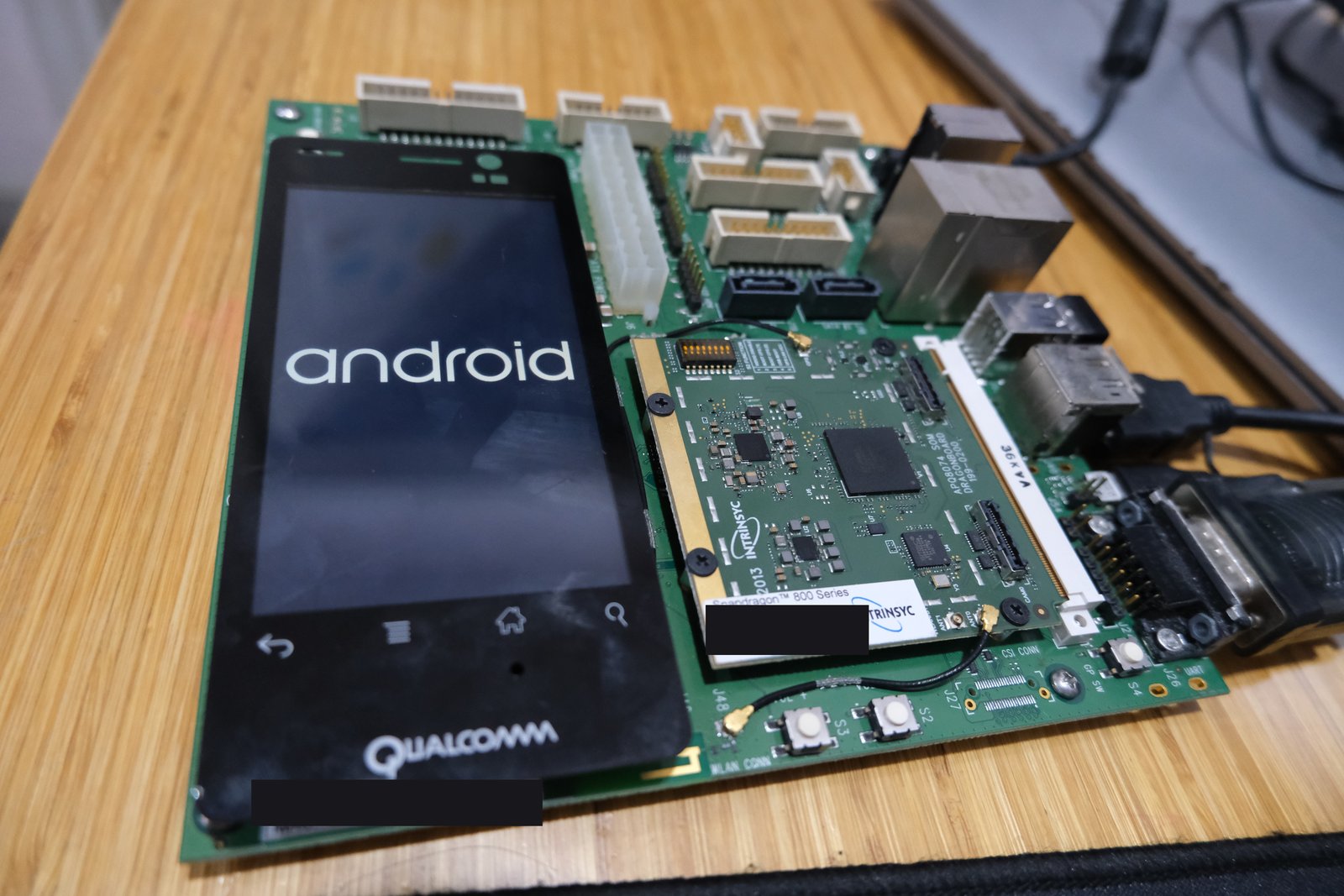 Android 15’s boot animation on the board’s own panel. The S/N and MAC labels are painted over.
Up to the launcher. Seven more, one after another: init.rc overriding my memfd setting back to
ashmem, no audio HAL (audioserver had crashed 162 times in one log), a missing xi:include file, a
vendor extension nobody serves, ext4 without POSIX ACL, an OCMEM lock failure after a warm reboot, and
the missing android.software.app_widgets feature. Rendering was still software (ANGLE on
SwiftShader): the GPU had no firmware yet.
Persistent boot. lk2nd at offset 0 of the 16 MiB eMMC boot partition, my Android
boot image at 512 KiB, stock aboot untouched. A small patch so adb reboot bootloader reaches fastboot
again. New kernels go in from Android itself:
14270464 bytes (14 M) copied, 0.709 s, 19 M/s
Result
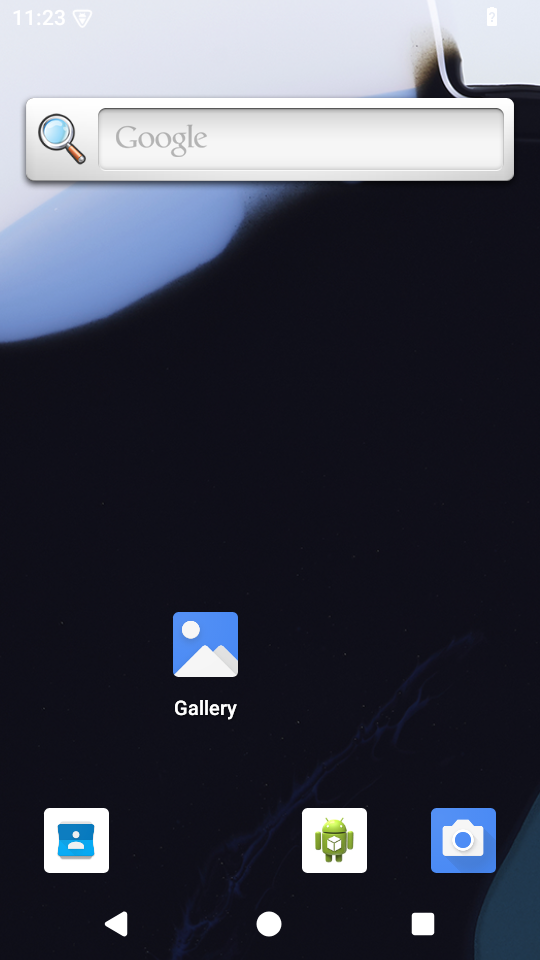
Android 15 (BP1A.250505.005.D1) on kernel 6.6.162, with Launcher3 on the panel. The first
boot_completed=1 came after 264 s, still with software rendering. Once lk2nd and my boot image sat
on the eMMC, it booted by itself at power-on and reached the home screen after 66 s. The stock boot
chain was never written, and the backup still matches its SHA-256 sums.
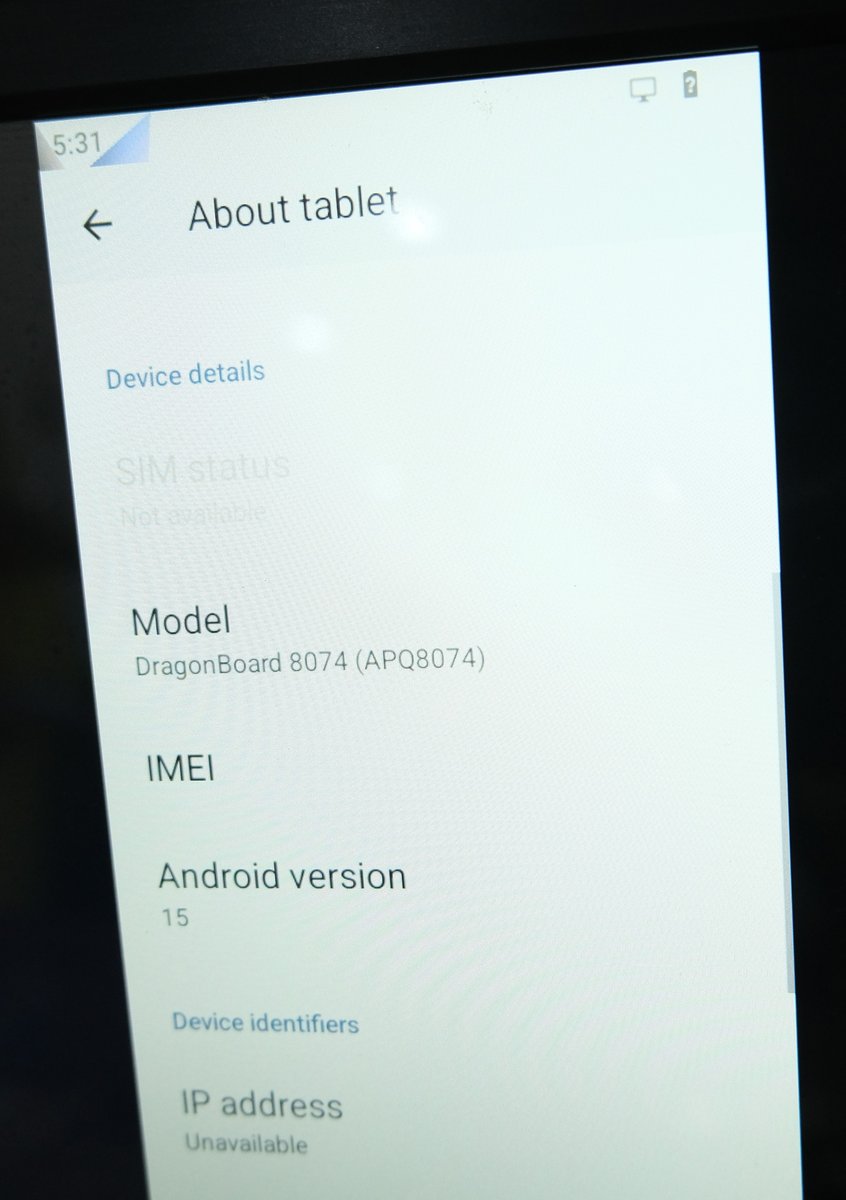 “About tablet”: DragonBoard 8074 (APQ8074), Android version 15. A photo of the screen, a bit blurry.
The 264 s was painfully slow. That’s the next story.
What I’d do next
The stock aboot still can’t flash a sparse super image (Unknown chunk type), so super updates go
through lk2nd’s fastboot. I’d like one flashing path for everything.